Volatility feels like danger, but for the long-term investor it’s much closer to weather: uncomfortable in the moment, entirely normal over time, and no reason at all to abandon the journey.
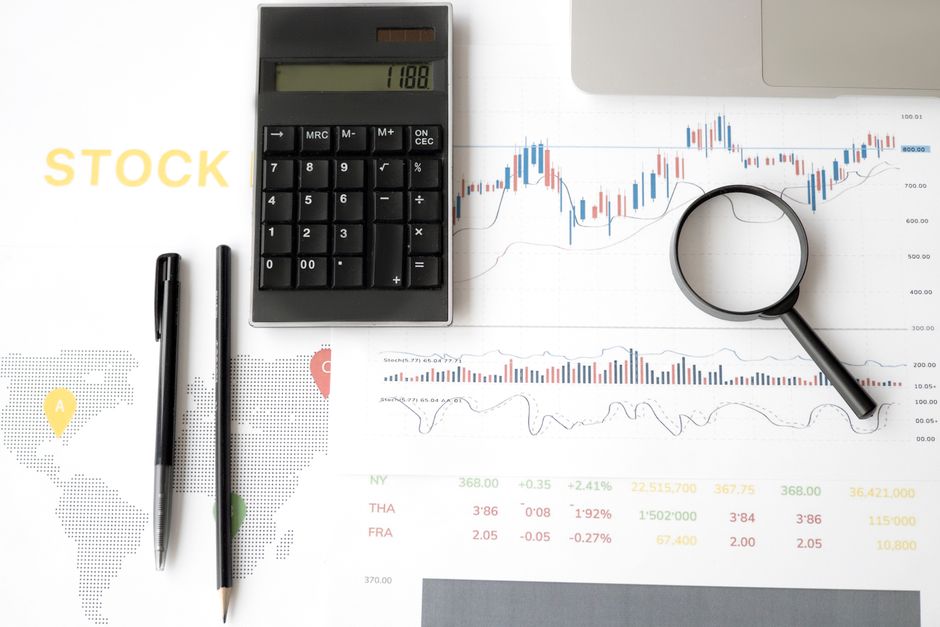
What Volatility Really Means
Volatility is simply the degree to which prices move up and down over a given period of time. A calm, quiet market drifts along gently with small daily changes. A volatile market, by contrast, lurches noticeably in both directions, sometimes moving several percent up or down in a single trading day, which can feel alarming when you watch it happen.
It is crucial to understand that volatility measures movement, not direction. A market can be highly volatile while it is rising just as easily as while it is falling. The word describes only the size and speed of the swings, not whether those swings are carrying your money up or down. People tend to only notice and fear volatility during declines, but the sharp up days are volatile too.
Some baseline level of volatility is permanently baked into owning stocks, and it cannot be avoided if you want the returns stocks offer. You are, after all, buying small pieces of real, living businesses whose fortunes genuinely shift with the economy, with competition, with new technology, and with the unpredictable moods of millions of other investors. Prices reflect that constant, real-time reassessment.
Accepting volatility as a normal and permanent feature, rather than treating each swing as an emergency, is one of the most important mental shifts a new investor can make. The market has never been smooth, and it never will be.
What Drives the Swings
Prices move fundamentally because expectations move. When new information arrives, whether it’s a company’s earnings report, an interest-rate decision from the Federal Reserve, an unexpected geopolitical shock, or a surprising jobs number, investors are forced to reprice what the future is worth. And they don’t all reach the same conclusion, so buying and selling pressure pushes prices around.
A great deal of short-term volatility, however, is driven by raw human emotion rather than by cold fundamentals. Fear and greed cause crowds of investors to overshoot in both directions, pushing prices well below or well above what the underlying businesses are actually worth. In the short run, the market can behave less like a careful calculator and more like an anxious, excitable crowd.
This is exactly why day-to-day price moves so often look irrational, because they frequently are. Over long periods of years and decades, prices tend to track the real earnings and genuine growth of companies fairly closely. But in the short run of days and weeks, prices can swing wildly on mood, rumor, and headlines alone, disconnected from any change in the actual businesses.
For a beginner, the practical implication is liberating: you don’t need to explain or react to every jump and drop. Much of the noise is just emotion working itself out, and it says little about the long-term value of what you own.
Why It Feels Worse Than It Is
Human brains are wired by evolution to feel the pain of losses roughly twice as intensely as they feel the pleasure of equivalent gains. A 10% drop in your portfolio stings far more sharply than a 10% rise delights, even though the numbers are identical. This built-in asymmetry is why volatile, falling markets breed panic that is wildly out of proportion to the actual figures on the screen.
Checking your portfolio constantly only amplifies this pain. The more frequently you look, the more likely you are to catch your balance in a temporary dip, and the stronger the urge becomes to do something, anything, to make the discomfort stop. Long-term investors very often do measurably better simply by looking at their accounts far less often and resisting the itch to react.
History offers real and lasting comfort on this point. The stock market has endured countless crashes, brutal recessions, world wars, pandemics, and utterly terrifying headlines across its long life, yet over every sufficiently long stretch it has ultimately trended upward and reached new highs. The investors who were truly and permanently harmed were almost always those who sold in a panic near the bottom and then never came back to participate in the recovery.
Recoveries, importantly, tend to happen suddenly and without warning, often bunching their biggest gains into just a handful of days. An investor who flees to the sidelines to feel safe very often misses those crucial rebound days, which does far more lasting damage than simply riding the downturn out.
Turning Volatility Into an Advantage
For someone still in the wealth-building phase of life, falling prices are not purely bad news, counterintuitive as that sounds. If you are regularly investing a fixed amount from each paycheck, a market downturn actually lets you buy more shares on sale, quietly acquiring greater ownership for the same money right before the eventual recovery arrives. Volatility, in this light, hands the patient buyer a discount.
The practical keys to surviving volatility without losing your nerve are straightforward. First, keep a solid emergency fund in cash, so you are never forced to sell investments at the worst possible moment just to cover a surprise bill. Second, hold a sensible mix of assets, like some bonds alongside your stocks, so that not everything you own crashes together in perfect sync. These buffers let you ride out storms calmly.
It also helps enormously to write down your plan while markets are calm and then simply follow it when they get scary. A predetermined rule to keep investing on schedule removes emotion from the decision at the exact moment emotion is most dangerous and most likely to lead you astray.
Above all, remember that volatility is the price of admission for the higher long-term returns that stocks have historically offered over bonds and cash. Accepting the swings calmly, and even welcoming the buying opportunities they create, rather than fleeing from them in fear, is ultimately what separates the investors who steadily compound their wealth from those who repeatedly lock in losses and start over.